
How SEO Helps Small Businesses Grow, Reach More Customers and Increase Sales
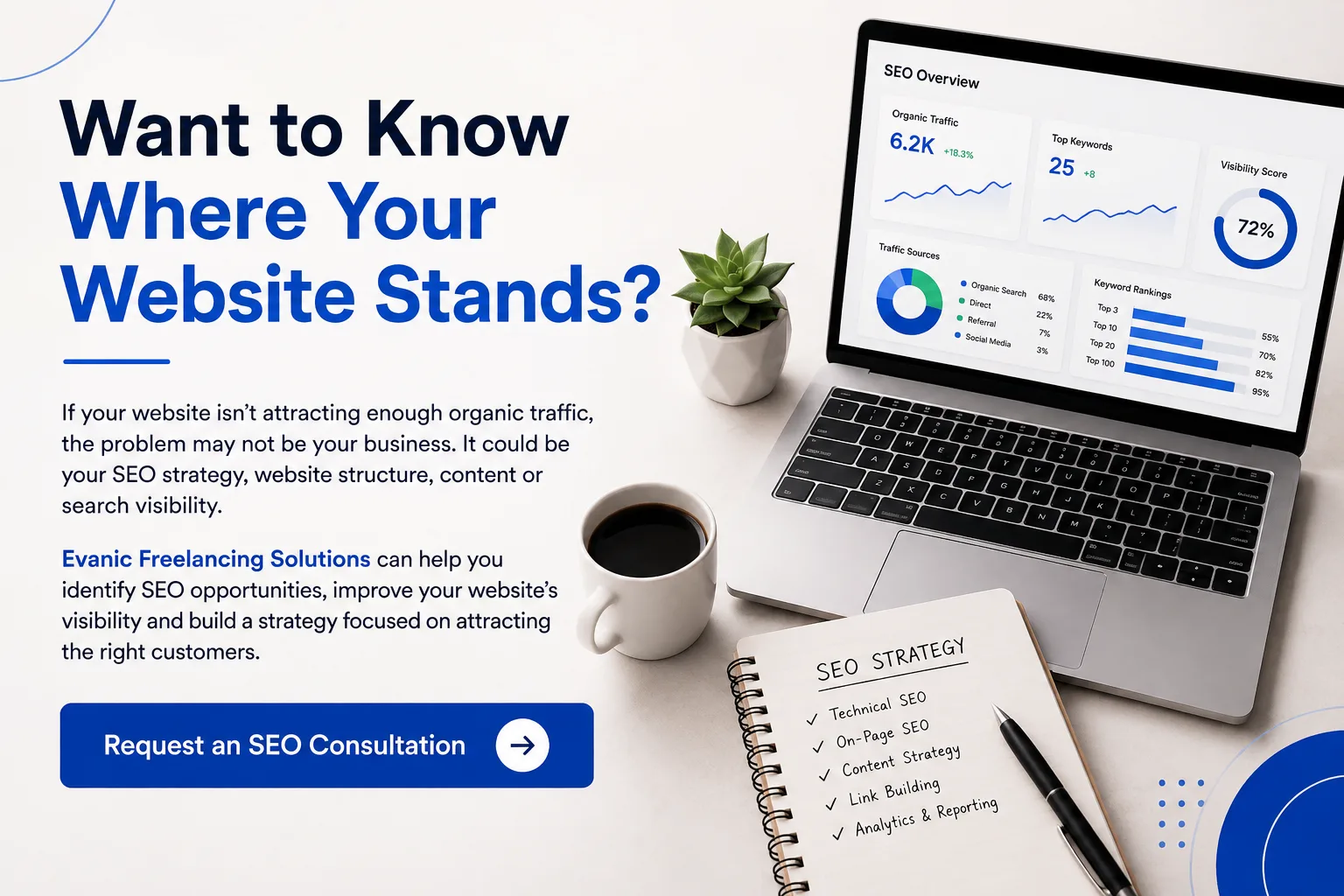
How SEO Helps Small Businesses Grow, Reach More Customers and Increase Sales SEO for small businesses is one of the most effective ways to increase online visibility, attract potential customers, generate qualified leads and build long term growth. By optimizing a website and its content for relevant search queries, a small business can appear when people are actively looking for the products or services it provides. Unlike paid advertising, where traffic generally stops when the advertising budget runs out, SEO can continue generating organic traffic after the initial optimization and content work has been completed. How Does SEO Help Small Businesses? SEO helps small businesses by making their websites easier to discover in search engines. A strong SEO strategy can help a business reach customers who are already searching for its products, services or solutions. The main benefits include: The value of SEO comes from reaching people at the right moment: when they have a question, need a solution or are ready to make a purchase. Why Is SEO Important for Small Businesses? SEO is important for small businesses because customers increasingly use search engines to discover businesses, compare options, research products and find solutions to problems. A business can have excellent products or services, but if potential customers cannot find its website when searching for those services, it can lose opportunities to competitors. For example, imagine a company that provides professional website development. Someone searches for: “website development company for small businesses” If the company’s website has strong SEO and relevant content, it has an opportunity to appear in the search results and introduce its services to that potential customer. This makes SEO more than a traffic strategy. It can become a customer acquisition channel. How Does SEO Help Small Businesses Get More Customers? SEO helps businesses attract customers by connecting their website with relevant search intent. People search for different reasons. Some are looking for information, while others are comparing solutions or preparing to buy. For example: Informational search:“What should a business website include?” Commercial investigation:“Best website development companies for small businesses” Transactional search:“Hire a website developer” Each search represents a different stage of the customer’s decision making process. A good SEO strategy creates useful content for these different stages and guides visitors toward the appropriate next step. That next step could be: 1. SEO Increases Organic Visibility One of the biggest benefits of SEO for small businesses is increased visibility in search results. When a website is properly optimized, it can rank for relevant keywords and questions related to the company’s products or services. For example, a digital marketing company could target searches such as: The goal is not simply to rank for as many keywords as possible. The goal is to appear for searches that are relevant to the business and likely to attract the right audience. 2. SEO Attracts People Who Are Already Looking for Your Services SEO can be particularly valuable because it captures existing demand. Consider the difference between these two situations. Someone sees an advertisement for a website development service while browsing social media. Another person searches: “How much does it cost to build an ecommerce website?” The second person has already demonstrated interest in website development. SEO allows businesses to create content that addresses these existing searches. This can increase the likelihood of attracting visitors with genuine interest in the company’s products or services. 3. SEO Helps Small Businesses Compete With Larger Companies Small businesses often cannot compete with large corporations on advertising budgets alone. SEO provides another opportunity. A smaller company can compete by creating highly relevant, useful and focused content around specific topics. Instead of trying to rank immediately for a broad term such as: “digital marketing” a small business might target a more specific search such as: “SEO for ecommerce businesses” or: “local SEO for restaurants” More specific searches often have a clearer intent and can be easier to target than extremely broad keywords. This approach is commonly known as targeting the long tail of search demand. 4. Local SEO Helps Small Businesses Reach Nearby Customers For businesses that serve specific locations, local SEO can be especially important. Local SEO helps businesses become more visible when people search for products and services in a particular area. Examples include: A local SEO strategy can include optimizing the business website, maintaining accurate business information, developing location relevant content and building legitimate local authority. For businesses with physical locations or defined service areas, local search visibility can translate directly into calls, visits, inquiries and bookings. 5. SEO Builds Trust and Credibility Search visibility can contribute to how potential customers perceive a business. When someone repeatedly encounters a company while researching a particular subject, that company can become more familiar to them. Trust can be strengthened further through: A business should therefore avoid treating SEO as simply inserting keywords into web pages. The strongest SEO strategy combines search visibility with genuine evidence that the business understands its field. 6. SEO Can Generate Leads Without Paying for Every Click Organic search traffic does not work exactly like paid advertising. With pay per click advertising, businesses generally pay when users interact with their advertisements according to the advertising platform’s pricing model. Organic search traffic is generated through unpaid search listings. That does not mean SEO is free. SEO requires investment in areas such as: However, successful SEO can create an asset that continues attracting search traffic instead of requiring a new advertising payment for every visitor. 7. SEO Improves the Website Experience Good SEO increasingly overlaps with good website design. Search engines need to understand a website, but users also need to navigate it easily. SEO improvements can encourage businesses to address issues such as: These improvements can benefit both search visibility and website visitors. A website that attracts thousands of visitors but provides a frustrating experience may still generate poor business results. 8. SEO Helps Businesses Understand Their Customers Search data can reveal what potential customers actually want. For example, a business
Top Web Development Trends Businesses Must Follow in 2026
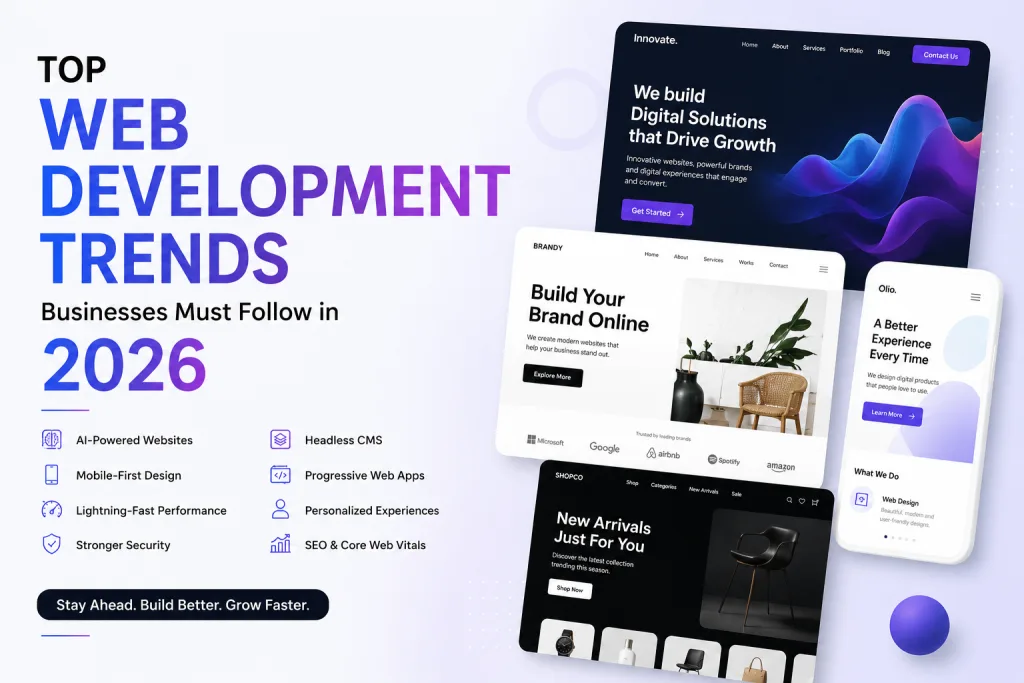
The digital landscape is evolving faster than ever, and businesses that fail to adapt risk falling behind. A website is no longer just an online presence, it has become a powerful business tool that influences customer trust, lead generation, sales, and long-term growth. In 2026, web development is being shaped by artificial intelligence, performance optimization, cybersecurity, personalization, and immersive user experiences. Businesses that embrace these trends will be better positioned to attract customers, improve engagement, and stay competitive in an increasingly digital marketplace. In this guide, we’ll explore the top web development trends businesses must follow in 2026 and how they can help future-proof your online presence. Why Web Development Trends Matter Technology evolves rapidly, and customer expectations evolve with it. Modern consumers expect websites to be: Ignoring these expectations can result in lower search rankings, reduced conversions, and lost business opportunities. 1. AI-Powered Websites Are Becoming the New Standard Artificial Intelligence is no longer optional. Businesses are integrating AI into websites to improve customer experience and streamline operations. Popular AI implementations include: AI helps businesses provide faster responses while improving customer satisfaction and conversion rates. 2. Mobile-First Development Remains Essential More users browse websites on smartphones than desktops. That means businesses must prioritize mobile-first web development. A mobile-friendly website should include: Google also prioritizes mobile usability when ranking websites, making mobile optimization critical for SEO. Related Service: Mobile App Development 3. Website Speed Is a Competitive Advantage Website visitors expect pages to load almost instantly. Slow websites increase bounce rates and reduce conversions. Businesses should focus on: Faster websites improve user experience and search engine visibility. 4. Headless CMS Adoption Continues to Grow Traditional content management systems are evolving. Headless CMS platforms allow businesses to deliver content across multiple digital channels from a single backend. Benefits include: Businesses investing in digital transformation increasingly prefer headless solutions. 5. Cybersecurity Is Now a Business Priority Cyber threats continue to increase each year. Customers expect businesses to protect their personal information. Modern websites should implement: Strong cybersecurity builds trust while protecting business reputation. 6. Core Web Vitals Continue to Influence SEO Google continues rewarding websites that deliver excellent user experiences. Businesses should optimize: Improving Core Web Vitals can lead to: 7. Progressive Web Apps (PWAs) Continue to Rise Progressive Web Apps combine the best features of websites and mobile apps. Benefits include: For many businesses, PWAs provide a cost-effective alternative to native mobile applications. 8. Accessibility Is No Longer Optional Inclusive design benefits everyone. Modern websites should be accessible to users with disabilities. Best practices include: Accessibility also improves SEO and overall usability. 9. Personalization Improves User Engagement Modern websites deliver experiences tailored to individual users. Examples include: Personalization increases engagement and conversion rates. 10. SEO and AI Search Optimization Go Hand in Hand Search is changing. Businesses should optimize not only for traditional search engines but also for AI-powered search experiences. Modern SEO includes: Businesses that invest in SEO today improve their visibility across both search engines and AI assistants. Related Article: SEO in 2026: What’s Changed? How to Prepare Your Business Website for 2026 To remain competitive, businesses should: ✔ Upgrade outdated websites ✔ Improve page speed ✔ Strengthen website security ✔ Implement AI-powered features ✔ Optimize for mobile users ✔ Focus on accessibility ✔ Improve Core Web Vitals ✔ Create high-quality SEO content ✔ Invest in scalable web technologies Small improvements today can deliver significant business results tomorrow. Why Choose Evanic Freelancing Solutions? At Evanic Freelancing Solutions, we help businesses build modern, high-performing websites that combine innovation, speed, security, and exceptional user experiences. Our services include: Whether you’re launching a new website or modernizing an existing one, our team creates digital solutions designed for long-term business growth. Ready to Future-Proof Your Website? Technology never stands still and neither should your business. If you’re ready to build a faster, smarter, and more scalable website, Evanic Freelancing Solutions is here to help. 👉 Explore Our Website Development Services 👉 View Our Portfolio 👉 Contact Us for a Free Consultation Let’s build a website that’s ready for 2026 and beyond. What are the biggest web development trends in 2026? AI-powered websites, mobile-first development, Core Web Vitals optimization, headless CMS, cybersecurity, progressive web apps, accessibility, and personalized user experiences are among the most important trends shaping web development in 2026. Why should businesses update their websites in 2026? Updating a website improves performance, security, SEO rankings, user experience, and compatibility with modern technologies such as AI-powered search and mobile-first browsing. How can businesses prepare for the future of web development? Businesses should invest in responsive design, fast-loading pages, AI integration, cybersecurity, accessibility, and SEO-focused content while adopting scalable technologies that support long-term growth.
Common Mobile App Mistakes Startups Make (And How to Avoid Them) | Evanic Freelancing Solutions
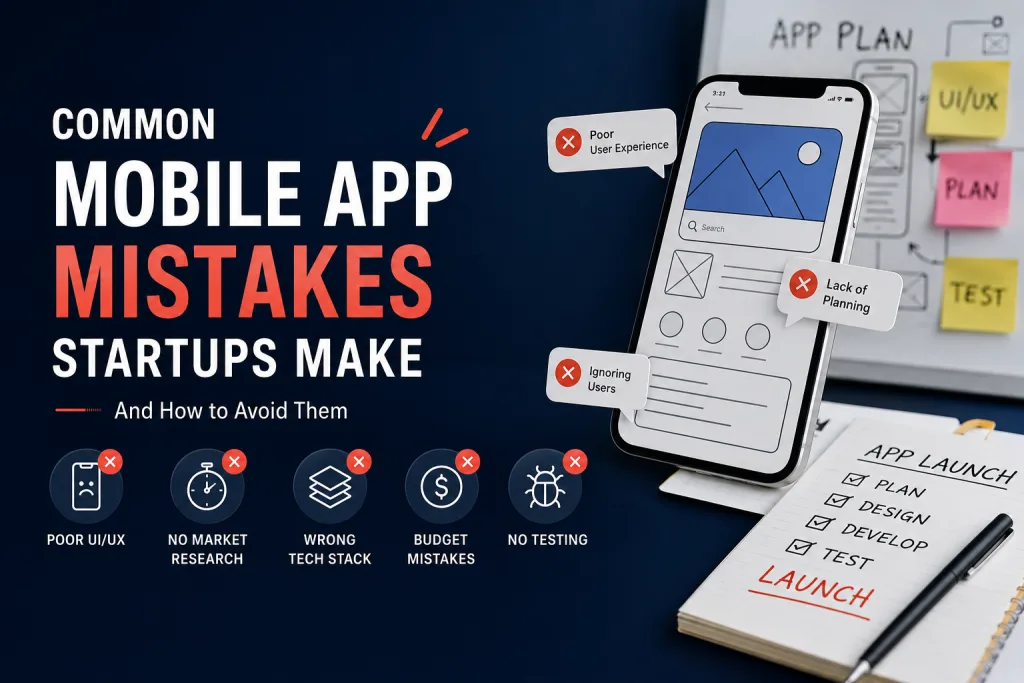
Building a mobile app can transform a startup into a scalable business. Some of today’s biggest technology companies started with a simple app idea and turned it into a global product. However, many startups fail not because the idea is weak, but because they make critical mobile app development mistakes early in the process. From poor user experience decisions to choosing the wrong mobile app development stack, small mistakes can lead to lost users, wasted budgets, and failed launches. If you are building your first application, understanding these common mobile app mistakes startups make can save time, money, and future headaches. Why Startup Apps Fail More Than Founders Expect One mistake startup founders make is assuming a great idea automatically creates a successful product. The reality is different. Many founders focus heavily on features while ignoring validation, usability, scalability, and long-term growth planning. Some of the mistakes that kill startups include: Startups that avoid these problems significantly improve their chances of success. 1. Building Too Many Features Too Early One common mistake too many tech startup founders make while building companies is trying to build everything at once. Founders often think: “More features mean more value.” In reality: More features often create: Instead, focus on building an MVP (Minimum Viable Product). Your MVP should solve one major problem exceptionally well before adding extra functionality. Better approach: Focus on: Simple products often win. 2. Ignoring User Experience (UI/UX) Many mobile apps fail because of bad design. Mobile apps with bad UI frustrate users and increase uninstall rates. Common UI mistakes include: Users decide whether they like your app within seconds. A clean interface improves: Signs your mobile app has bad UI: ✔ High bounce rates✔ Low retention rates✔ Poor app reviews✔ Users abandoning onboarding Good design is not decoration. Good design drives growth. 👉 Learn more about UI/UX and development solutions: 3. Choosing the Wrong Mobile App Development Stack Your mobile app development stack affects speed, scalability, maintenance costs, and future growth. Many startups choose technology based only on trends. That creates long-term problems. Popular stacks include: Native Development For iOS: For Android: Best for: Cross-Platform Development Popular frameworks: Best for: Backend Technologies Examples: The wrong stack can create: Choose technology based on business goals, not hype. 👉 See our development capabilities 4. Launching Without Market Validation One of the biggest mobile app development mistakes to avoid is building before validating demand. Founders often spend months building products nobody wants. Before development begins: Ask: Validation methods: Validate first. Build second. 5. Underestimating Development Costs Many startups search for an affordable mobile app development service and immediately choose the cheapest option. Low pricing alone does not guarantee value. Cheap development often creates: Instead of focusing only on affordability, prioritize: How to choose a mobile app development service Look for: ✔ Portfolio quality✔ Technical expertise✔ Communication process✔ Scalability planning✔ UI/UX capability✔ Post-launch support The right development partner reduces long-term costs. 👉 Request a project consultation 6. Skipping Testing Before Launch Many startups rush development. That creates bugs. Bugs destroy trust. Testing should include: Functional Testing Ensures features work properly. Performance Testing Measures speed and responsiveness. Security Testing Protects user data. Device Compatibility Testing Ensures consistent performance across devices. Quality assurance should never be optional. 7. Ignoring AI Opportunities Artificial intelligence is reshaping software development. Many startups now ask: What are the essential steps to launch AI models? If your product includes AI capabilities: Key steps include: AI integration requires planning. Poor implementation creates poor experiences. Smart implementation creates competitive advantages. 8. Not Planning for Scalability Your startup may begin with 100 users. But what happens when it reaches 100,000? Scalability planning matters. Areas startups often ignore: Scaling problems can destroy momentum. Build with future growth in mind. 9. Learning Mobile App Development Without Understanding Business Goals Learning mobile app development is valuable. But technology alone does not create successful companies. Founders should understand: Technology supports business. Business strategy drives success. 10. Building Without Analytics Data improves products. Without analytics, founders operate blindly. Track: Analytics reveal what users actually do — not what founders assume. Final Thoughts Building a successful startup app requires more than development skills. The most successful founders avoid common mobile app mistakes startups make by focusing on validation, user experience, scalability, and strategic execution. Avoid shortcuts. Choose the right mobile app development stack. Prioritize strong UI. Validate demand before building. And invest in quality development from the beginning. The startups that win are rarely the ones that build the fastest. They are the ones that build the smartest. About Evanic Freelancing Solutions Evanic Freelancing Solutions helps businesses, startups, and entrepreneurs build scalable digital products through mobile app development, website development, digital growth solutions, and technology services designed for modern businesses. Ready to build your next digital product? Start with strategy first. 👉 Get Started With Evanic Freelancing Solutions Today

 English